Content Fatigue Is Real: How Brands Win by Saying Less
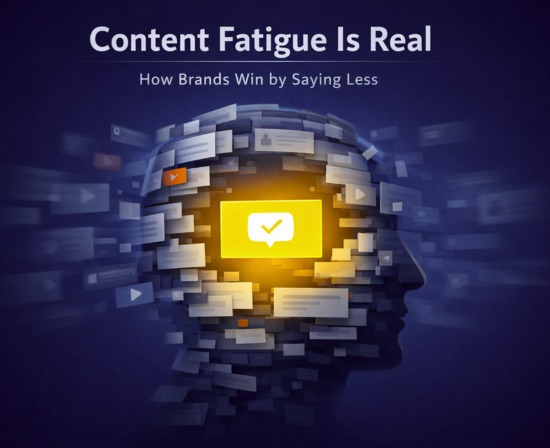
Today, Content fatigue is real just because your user feels it every time they scroll. Brands are trying their best version to stay visible as a result our feeds are flooded with repetitive posts and over explained posts. Which effects the good content are getting ignored not because it is boring or wrong just because it simply too much of it. Let us clear it with real example;
Think about the 10 posts that you scrolled past a few minutes.
Can you remember even one?
Most probably Not. It is not because the content was bad. The main reason is that your brain is already overloaded. Because every scrolling brings new hookline, new interesting reels, every brand trying to grab the user's attention at the same time. This is what content fatigue really looks like. Audiences are not uninterested but actually they are overwhelmed.
In today’s article, we will explore why content fatigue is really growing at a fast rate and how brands can earn attention in a crowded feed.
What Content Fatigue Actually Looks Like Today
Actually content fatigue is really not how people feel but in simple words it is a measurable behaviour shift of the users.
A digital behaviour consistently research shows that the attention of the users drops within a few seconds. Which means most of the short form videos are decided in the first 3 sec whether the users will stay or scroll down it. This shows us why even high quality videos and having good visuals also have to struggle to retain engagement.
Most of the people don’t read the content anymore actually they only scan it. Headlines get a passing look and then converted into the scrolling if it is not bold or eye catchy. Now, the real goal is to grab the attention as quickly as possible with the help of minimal effort rather than fully consume content.
In fact, Most of the platforms now prioritize engagement through signals including watch times, saves and shares not just only views. That is why these signals indicate whether the content was valuable enough to make the people stop or not just keep scrolling.
Today's content fatigue doesn’t mean people have short attention spans but they are selective with their attention and content clarity makes the users stop from scrolling.
Why “More Content” Stopped Working
In the past years, there was an unwritten rule in digital marketing that more posts to be seen more. Which worked best as the internet was not crowded that time. Because the fewer brands were active and showing up frequently helps the higher visibility. Each and every post had a space to breathe and users were actually able to notice who was present.
Then
More content means more reach.
More reach means more attention.
More attention means more growth.
Now
More content means more sameness.
More sameness means faster scrolling.
Faster scrolling means being ignored.
Once every brand entered the same platforms in the results volume lost its edge and became noise. Hence, feeds filled up with the identical formats, repetitive messages and predictable hook. So, when everyone is trying to speak at once then there is no single voice that feels important to stop them.
These days, posting daily doesn't mean it helps in increasing brand visibility but it increases the competition with yourself. Every new post competes with previous one for the same limited attention. Frequently posting gets diluted rather than reinforcement.
The rule didn’t fail because the content stopped mattering but it failed just because volume loses its power when everyone starts shouting. In a scroll heavy feed the attention doesn’t go to the loudest brand but it goes to the clearest ones.
The Attention Threshold: How Much Content People Can Really Process
Here’s the reality that most of the brands get avoided due to the audience not getting run out of interest but actually they run out because of mental capacity.
With every scroll forces the user's brain to take the decision whether to watch or skip, read or ignore and most importantly care or move on. This constant of choosing creates cognitive overload. To protect itself the brain starts opting out automatically but not emotionally.
This leads to decision fatigue. After making too many micro-decisions then the people stop engaging deeply. They scroll faster, skim rather than read and quicker disengagement. It is not because of lack of interest in your brand but actually it’s about how much mental energy they have left.
Brands often assume that their audiences will slow down, pay attention and process context. But in reality they are mentally exhausted before they reach your content. If the message which you want to convey is not clear or valuable then it's gonna fall outside their attention threshold and get filtered out.
The truth is very simple and clear that the users don’t have less interest but in short they have less mental space. Brands who understand this have to stop asking for more attention rather they have to start earning it by clearer, lighter and even more intentional with every message.
Algorithms Don’t Punish Silence—They Reward Relevance
There is a Persistent Myth in content marketing that is if you stop posting then the algorithm will punish you. This fear pushes most of the brands to publish the post even when they have nothing meaningful to post. But in reality algorithms don’t reward desperation in effect they reward interest.
Platforms are designed to measure how people respond to the content rather than how frequently it’s uploaded. If the post is ignored by skipped, scrolled past or quickly exited then it sends a clear signal to the algorithm that the content was not relevant. On the other hand, if a single post gets shared, saved and watched till the end which tells the algorithm that it is worth showing to more people.
That’s why one single, strong and relevant post will always outperform five rushed ones that it fails to connect. Today, visibility is earned through engagement but not from volume.
Consistency now goes beyond frequency. It doesn’t mean posting every day to stay “active”. It means consistent standards of value. When users will get to know that your content is worth their time then they trust you more and most probably trust translates into stronger signals for algorithms.
Hence, silence is not the enemy but Irrelevance is.
Saying Less Forces Better Thinking
When the brand builds a strategy that starts to stop filling the space just to stay visible then the clarity naturally improves. This approach is very helpful to improve both the quality of the brand thought and how the effective audience receives it. As it helps the brand to speak more intentionally, focused and more clear with their message.
Here’s how saying less improves the Thinking;
- Clarity over noise- When there is no need to publish the content constantly then the brand spends more time to think about what message they want to convey to their audience instead of pushing out the content just to fill the content calendar.
- Encourages Quality over Quantity- Impactful communication is not about saying more but it is about what matters. Choosing the words with intention is helpful for ensuring that each message makes communication strong and clear.
- Build credibility- Saying less pushes the brands to clearly define their core ideas and values. Which helps them to communicate with confidence, feels deliberate and aligned with what the brand truly stands for.
- Valuing Audience Attention- Clear and concise content helps to feel thoughtful but not overwhelming which makes the people more likely to engage and remember the content.
- Single, Strong Message- Brands have to focus on one clear and powerful idea that truly lands rather than diluting their message through constant posting.
At last, Clarity is not created by adding more content. It is created when the brands start to stop filling spaces and start communication with the intentions.
From Noise to Signal: The Power of Intentional Content
In a feed that is full of constant updates and most of the content fades in the background. It is not because the brands are not trying but it is creating too much without any clear intention. When the brands create the content just to stay visible then they create the noise but when they create content with the purpose then they create the signal.
Intentional content stands out because;
- Value-Driven Design: When brands shift their focus from selling to building a community through content that feels reliable, meaningful, high quality and trustworthy content.
- Focused on one strong idea: Brands are most effective when they are more focused on the single and meaningful idea. Instead of covering everything at once.
- Audience Focus: Brands should design the content according to the needs of the users rather than what they want. Which helps to drive the attention of the audience.
- Designed for relevance, not volume: By valuing the timing and the context over the frequency as it ensures the content is intentional and useful.
When the brands shift from producing the noise to delivering the signal then the engagement becomes meaningful, attention turns into trust and content starts working hard. Without any need to be the louder.
How High-Impact Brands Use Fewer, Stronger Messages
The High impact brands always don't try to say everything at once. Firstly, they decide what matters the most and then they say it consistently, clearly and with deep depth.
Their main aim is to focus on a small set of core messages and explore it deeply rather than spreading themselves thin across constantly updates. Each piece of content gives the reinforcement by using the same idea from a different angle and helps the audience to understand, remember and trust the brand over the time.
Key Strategy
- They go deeper, not wider: A single well-explained topic creates more impact than the multiple posts dilutes the message.
- They prioritize understanding over reach: The clear understanding among the right audience is more valuable than it reaches everyone or the wrong audience.
- They build familiarity through focus: The intentional repetition of a clear and focused content which helps the brands to build familiarity and trust without creating the content fatigue.
The limitation of what they say gives a high impact on the brand and amplifies how well they are understood.
Creating Content People Want to Save, Not Scroll Past
In today’s era, creating the content which people want to save has become one of the strongest signals of value. People save the content which they want to return with something useful, insightful or worth remembering. This makes a saveability which means a more meaningful form of engagement than passive likes or fleeting views.
Key Strategies for Scroll-Stopping Content
- It solves a specific problem
- It delivers clarity, not clutter
- It feels timeless, not trendy
- It respects the audience’s time
- It offers real takeaways
- Provide Real Value and Clarity
When the brand shifts their goal from being like to being saved then the quality of the content naturally improves. If the content is saveable then its stay longer, give signal of a deeper interest to algorithm and build lasting trust. In a content heavy feed, the content which people save truly is the content which stands out.
Likes are easy, Saves are intentional.
When Not Posting Is the Smarter Strategy
Constant visibility is frequently mistaken for being trustworthy. In fact, knowing when to post can give boosts to the brand credibility.
Posting without any purpose is just to stay active which can dilute the messages and reduce the impact. When your content is constant then the audience learns to expect the noise rather than meaning. Strategic pauses break that pattern which helps in creating clarity and communicating confidence.
Here’s why pauses can work in a brand’s favor:
- Silence filters out filler: When brands post minimum then only the relevant content go through.
- Pauses Create Anticipation: Brand's absence helps in increasing the curiosity of the audience and makes the next message intentional.
- Focus on the quality: Pausing in content creation helps to create spaces for better thinking, clearer strategy and more intentional messaging.
- Relevance beats routine: In real life, posting at the right time makes more impact than posting according to the schedule.
Winning Attention in a Saturated Feed
In a crowded digital space, where everything is posting for attention. But for winning the attention your brand’s main goal is being remembered.
Users don't recall the brands that are posting everything and every time. In fact, they recall the brands who are clear, consistent and intentional. When the content is focused then it creates stronger mental associations. People may see fewer posts but they remember what the message is.
Winning attention today comes down to a simple shift:
- Less content but clear ideas
- Recognition over reach
- Quality exposure over constant presence
- Clarity reduces mental effort
- Content that’s easy to understand is more likely to stick
- Recall drives trust
In a saturated feed, the real attention is not captured by the volume. But it earned through precision. Brands who say less but say it clearly are those who are the ones who not only just seen but they get remembered long term.
Final Takeaway
Content Fatigue is not a trend but it is the reality of today’s world. Content Fatigue has changed how the user's attention works. The audience is overwhelmed, attention is limited and noise is everywhere.
In today’s crowded digital space, brands don’t win by posting more posts but they win by being clearer, more intentional and more selective with what they want to say. By saying less which impacts in creating stronger recall, deeper trust and lasting impact.
Clarity over volume is the real competitive advantage.
Written by
Bhavneet Kaur
Webcooks Team