Content That Sells vs. Content That Only Gets Likes
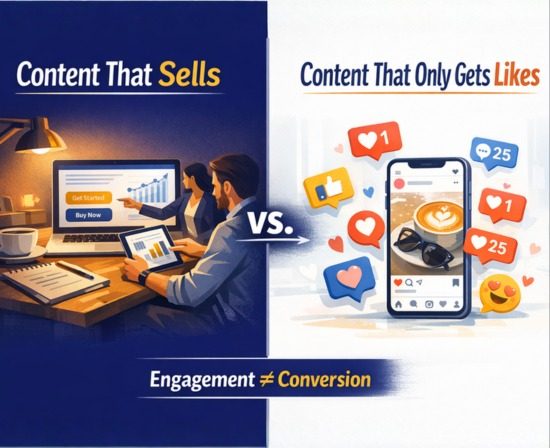
Many of you get confused to see the difference between content that sells with content that only gets likes. So, here I am to solve your problem. In today's article you will get to know about the real difference between engagement and conversion.
Content that Sells is the content which is created with a clear goal of conversion not just for engagement/likes. It is a market strategy that is used for interaction between the brand and their buyers. It builds deep trust, solves buyers' problems and tells the CTA. It turns followers into the buyers.
Content That Gets likes is the content which is created for entertainment or follows the trend without a clear goal of conversion. It builds general awareness, receives high engagement such as likes, shares and comments but doesn't attract the audience towards CTA or making a purchase.
The Real Difference Between Engagement and Conversion
The key difference between them is High Engagement brings likes which makes feels good but High Conversion Grows the business.
Engagement: It is when people interact with our content. The goal is to get attention, build trust, increase visibility, and most importantly brand recall.Here, people show interest not intent. The Cold audience(which means people who casually follow the brand) is the main target of the engagement content. The main strategy is
- Educational/Entertainment content
- Brand Visibility
- Likes, comments, shares, saves
- Focus on brand value
Conversion: In simple words conversion is when people take action. The goal is to make followers into customers which means it drives action that leads to business results. The Warm or Hot audience (which means people who already know the brand , trust, or interact with the brand) is the main target of the conversion content. The main strategy is
- Clear CTA
- Build Trust
- Testimonials, offers
- Retargeting
- Focus on problem, solution, benefits, and outcomes
In short
Engagement= “I Like This”
Conversion= “I am ready to buy”
Why Viral Fails When it Comes to Sales
In today’s era, everybody wants to go viral. Even small businesses are working so hard for more likes, views, shares and more followers but there is a dark side when it comes to sales. Viral content doesn’t always bring intention.
People may like, share and comment on your content but they are not always ready to buy. Many viral posts entertain a broad/cold audience but sales need a real connection with the real audience. Viral content grab attention but not sales because:
- No clear CTA
- Reaches wrong audience
- Not Build any trust
- Entertainment over value
- Remembered for content not for brand scalability
Let us clear it with example,
Netflix’s Meme
Most of the time Netflix”s Meme campaigns go viral because they are funny, relatable, and easy to share. But people don’t buy their subscription through memes because they engage with them for entertainment purposes, not because they are planning to buy their subscription.
How Buyer Intent Changes the Way Content Performs
Customer intent decides whether your content gets likes or actually gives you the best result. When customers have high intent to make a purchase or solve a problem then they pay closer attention and are more likely to take action. When customers have low intent to make a purchase which consumes curiosity or boosts engagement but rarely leads to sales. So, content must be aligned with a specific stage to the customer’s behaviour to maximize engagement.
Here are the key points of the buyer intent changes how content performs:
- Low Buyer Intent
- Medium Buyer Intent
- High Buyer Intent
Content That Get Likes: What It’s Built For
Content that gets likes is designed to build entertainment and create an engagement. The main aim of this type of content is to increase engagement, brand reach, visibility and brand awareness. It is not meant for action, sales content or trust building. Its main goal is to start conversation and make brand visibility not to give immediate sales.
Content That Sells: What It Needs to Communicate
Content that sells must clearly interact with the customer’s problem and tells that the brand understands your problems. Content should be customer centric which means problems, guidance, needs all should be according to the customer rather than pushing the product. Most importantly, there should be a clear CTA that should be added to give guidance to followers to take next to take the action to become customers.
Key Elements
- Educational content
- Clear CTA
- Relevance
- Solution
- Real audience
- Interactive
- Build Trust
The Role of Trust in Sales-Focused Content
Trust is the backbone of Sales-Focused Content. It works as a bridge between interest and action. No matter how attractive your product/offer but if the trust is missing then sales will struggle. It gives credibility to the customers that they are making the right choice. For example, whenever we spend money on a product we ask ourselves “Can I trust this brand or not”.
Key Role of Trust in Sales-Focused Content:
- Build Honesty
- Reduce fear of wasting money
- Encourages Engagement
- Reducing Decision Time, Increasing Conversions
- Reduces Buyer’s Anxiety
- Creates Emotional connection
Why Most Brands Confuse Attention With Interest
The confusion between the attention and interest is one of the biggest problems of the content failing to deliver the real brands results. Attention is the moment when you make someone stop scrolling. On the other hand, Interest is the moment when someone wants to know more about your brand.
Most brands go wrong because:
- Priority on views over value:
To stay visible most of the brands just follow the trend. It only brings attention which attracts the wrong audience who love to enjoy the content but don’t have any intent to buy the product.
- Hook without direction:
Without any clear message even a strong hook is worthless. As a result, you will get views but not interaction.
- No Clear CTA:
Interest viewers fade quickly if content doesn’t guide them what to do next. Without clear CTA interest drop down.
Where Sales Actually Happen: The Hidden Part of the Funnel
Most of the brand believes it happens at the bottom of the funnel where buyers fill the form or click on buy now product but they are completely wrong. The actual sale happens in the hidden part of the funnel which refers to the ‘Dark Funnel’ which include all the conversation, analysis, direction activities that occur beyond a brand tracking and ability trait. Diverse Companies ignore this stage but customers never.
The Hidden Part of the Funnel
There is an invisible stage where real decisions are made by the customers:
- Read reviews silently
- Look for proof
- Follow your brand without engaging
- Compare options
This is the part where sales actually won or lost. No likes, No comment only purchase.
What Real Sells in Dark Funnel
- Trust Building Content
- Social proof
- Repeated value
- UGC
- Clarity over Hype
How to shift Your Content From Vanity Metrics to Value Metrics
Vanity Metrics are the numbers that look on the post but don’t show the result on real brand growth. For example, share, like, view, reach, followers and so on.
Value Metrics measures the real result of the business goal. For example website clicks, time spent on page, lead generated, e-mail sign ups etc. So,If your content only gives you attention but not results which means it’s a high time to change your content from vanity metrics to value metrics.
How to shift it:
- Start with Clear Content Goal
Every piece of the content should have a clear goal. If the goal is not clear then the result wouldn't be clear either.
- Niche Audience Content
Generic content attracts huge attention. Here, clarity increases the rate of conversion. Speak directly to one problem and one outcome.
- Measure Trust Indicators
Trust are the real value metrics that don't reflect easily. You should always track who are:
- Website returner
- Repeat viewer
- Regular inquiry
- Customer Referral
These are the signals that show you that your content is working even when likes are low.
- Follow buyer Intent
Always track the buyer's journey which means measures the how content supports for example; track awareness, consideration, Decision-making and so on.
- Intent over Applause
Rather than tracking likes you should track the behaviours of the customers that show interest which means track
- Profile visits
- Saves
- Link clicks
- Replies and DMs
- Time spent on page
These are the signals which reflect that your content is not only consumed.
What High-Intent Users Look For Before Buying
High Intent buyers are not casual scrollers. They are real decision makers and one step beyond to purchase the product. Always understand what high intent users want before buying the product which helps you to create content that attentives but not just attracts the attention.
- Problem Fit Clarity
High intent users want to quickly understand their problem and solution that fits exactly to their needs.
- Answers to objection
Content that gives proactively answers to the objection that helps users to move forward faster.
- Trust signals
Always post real photos and videos and repeat customers' stories. These signals quietly tell them they are making the right choice.
- Brand credibility
Buyers silently check your brand before buying the product like how you communicate, website quality, social media consistency etc.
Final Takeaway
Engagement may give your content a boost but conversions make your brand grow at a successful rate. Content that sells is not based on likes and comments instead it's clear, intentional and trust built content. When you stop chasing on vanity metrics and start understanding buyer intent then content begins to guide them.
Written by
Bhavneet Kaur
Webcooks Team