The Patience Strategy: Why Long-Term Marketing Outperforms Quick Campaigns- customer funnel
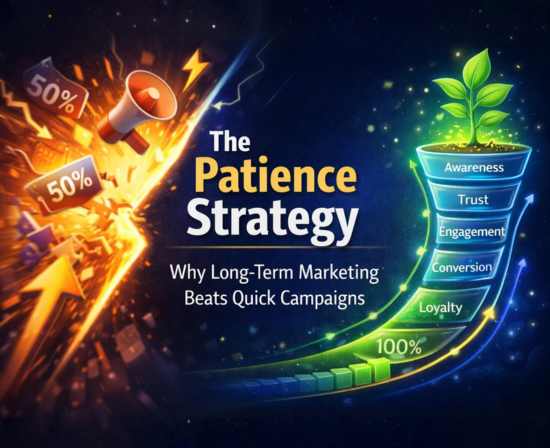
The increasing pace of the technology-driven world calls for immediate measures in the marketing field. Organizations always want immediate recognition, leads, and conversions. These tactics might prove to be very useful for achieving instant results but never count towards achieving long-term success. The secret to genuine brand success lies in achieving it through long-term marketing concepts.
Long-term marketing thinking is in line with the way customers think. Long-term marketing does not think about gratification but more in line with the way the customer moves through the funnel of awareness to loyalty. Results do not evaporate once the campaign ends.
Why Short Campaigns Rarely Build Lasting Recall
Short-term campaigns are designed to capture the attention of their audience quickly; however, attention does not equate to memory. In order for a brand to be recalled, repetition and familiarity must be involved. When a campaign surfaces and disappears just as quickly, audiences may notice it but just as quickly forget. Lasting recall develops when customers encounter a brand across platforms consistently with clearly aligned messaging. Repetition strengthens recognition; recognition builds comfort. Without this continuity, short campaigns often fail to leave a lasting impression.The Hidden Cost of Chasing Immediate Results
Quick wins appear very attractive in analytics reports; however, they involve certain ‘hidden costs.’ When brands are oriented toward achieving immediate outcomes, they tend to be very focused on performance metrics but pay less attention to brand health. Consider a startup that could come up with discount campaigns to lure new customers and increase their business. Even though the business will grow during the initial discount offers, customers become discount-conscious once the offers end. Chasing immediate results can result in:- Poor brand positioning
- High customer acquisition costs
- Low Lifetime Customer Value
- Over dependency on paid advertising
How Audience Trust Develops Slower Than Metrics
Metrics move fast, trust builds up slowly.” It takes a user just a few seconds to click on a given ad, but trusting a brand takes many pleasant experiences. Trust is built if a brand is able to:- Always add value
- Ensure transparency
- Keep promises repeatedly
- Display knowledge and credibility
Why Repeated Value Beats One-Time Visibility
Visibility without value is a temporary state. Value without visibility goes unobserved. Effective and lasting marketing is a combination of both visibility and value. It might seem appealing to weigh in once in a viral video, but regular postings of education, blog articles, email communications, or social media retain viewers' interest on a continuous level. An example of this would be a skin care company sharing skin care tips and results on a regular basis. Repeated Values helps :- Build Familiarity
- Enhance credibility of brands
- Enhance customer relationships
The Timeline Brands Underestimate When Planning Growth
One of the most probable mistakes in the world of marketing has to do with the evaluation of the time needed to effectively scale. They want the results in weeks when the reality may take months, even years. A realistic time line for a marketing effort might include the following phases or elements,- 0–3 months: Brand awareness and early engagement
- 3–6 months: stage of acquaintance-building and confidence development
- 6–12 months: Contemplation and repeated contact
- 12+ months: Loyalty, referrals, and organic growth
Why Patience Is Becoming a Competitive Advantage
In today’s fast-paced marketplace, a virtue in short supply is indeed patience—and that only gives more strength to being a patient brand. Most brands are quick to abandon strategies, always in a rush to move on to the new trends and platforms. Consistent brands have a huge advantage. Patience allows for things to sink in and for familiarity and compound results to be built. Eventually, consistency leads to authority, and authority leads to trust. For instance, brands such as Nike or Apple didn’t have to do the whole discount business. They engaged in storytelling that enabled them to build unmatchable loyalty among their fans In a competitive market, just being there often is an effective means of differentiation. How Long-Term Brands Win in Short-Attention Markets Short attention spans don't mean that customers are not loyal; they simply depend on familiarity. When there is limited attention by consumers, they'll go for the brands they can trust. Long-term marketing: Ensure that the presence of the brand occurs during the buying decision. For example, if a customer requires a digital marketing service or a fashion boutique, then the customer would find the services of a company they have been following on a social platform more credible in the long run as opposed to the one whose blogs they may have been reading. Long-term brands win by:- Showing up consistently
- Repeating core messages
- Building strong visual identity
- Relationship over reach
Conclusion
Patience isn’t a passive waiting option. Rather, patience is a wise investment of time. Long-term marketing will always outperform the quick-fix variety because it simulates the customer's thought processes, trust processes, and decision processes exactly." While a campaign over a short period often generates outcomes, it is a long-term marketing approach that leads to building:- Strong brand recall
- Customer trust
- Sustainable Growth
- Loyal communities
Written by
J
Jasleen Kaur
Webcooks Team